Hidden beneath the glacial waters of Þingvallavatn Lake lies Silfra, a tectonic crack where the North American and Eurasian plates slowly pull apart. Formed by geological forces millions of years in the making, this fissure offers visitors a chance to touch two continents at once.
Silfra's story begins deep in geological time, rooted in the volcanic hotspot beneath Iceland that has been active for roughly 60 to 70 million years. Iceland itself sits astride the Mid-Atlantic Ridge, the boundary where the North American and Eurasian tectonic plates diverge. As these two massive slabs of Earth's crust pull apart at an average rate of approximately 2 centimetres per year, the land above is stretched, fractured, and reshaped. Þingvellir, the rift valley that hosts Silfra, is the surface expression of this relentless geological process. The valley floor sinks by around 1 to 2 millimetres annually as the plates continue their slow, inexorable separation.
The specific fissure now known as Silfra was created by a powerful earthquake in 1789, which caused significant subsidence and cracking across the Þingvellir rift zone. This seismic event tore open a series of deep cracks in the basaltic lava fields, with Silfra becoming the most dramatic and enduring of these formations. Over the following decades and centuries, glacial meltwater from the Langjökull glacier — Iceland's second-largest ice cap — began percolating through the porous lava rock surrounding the fissure. This natural filtration process, taking anywhere from 30 to 100 years, would eventually give Silfra its legendary water clarity.
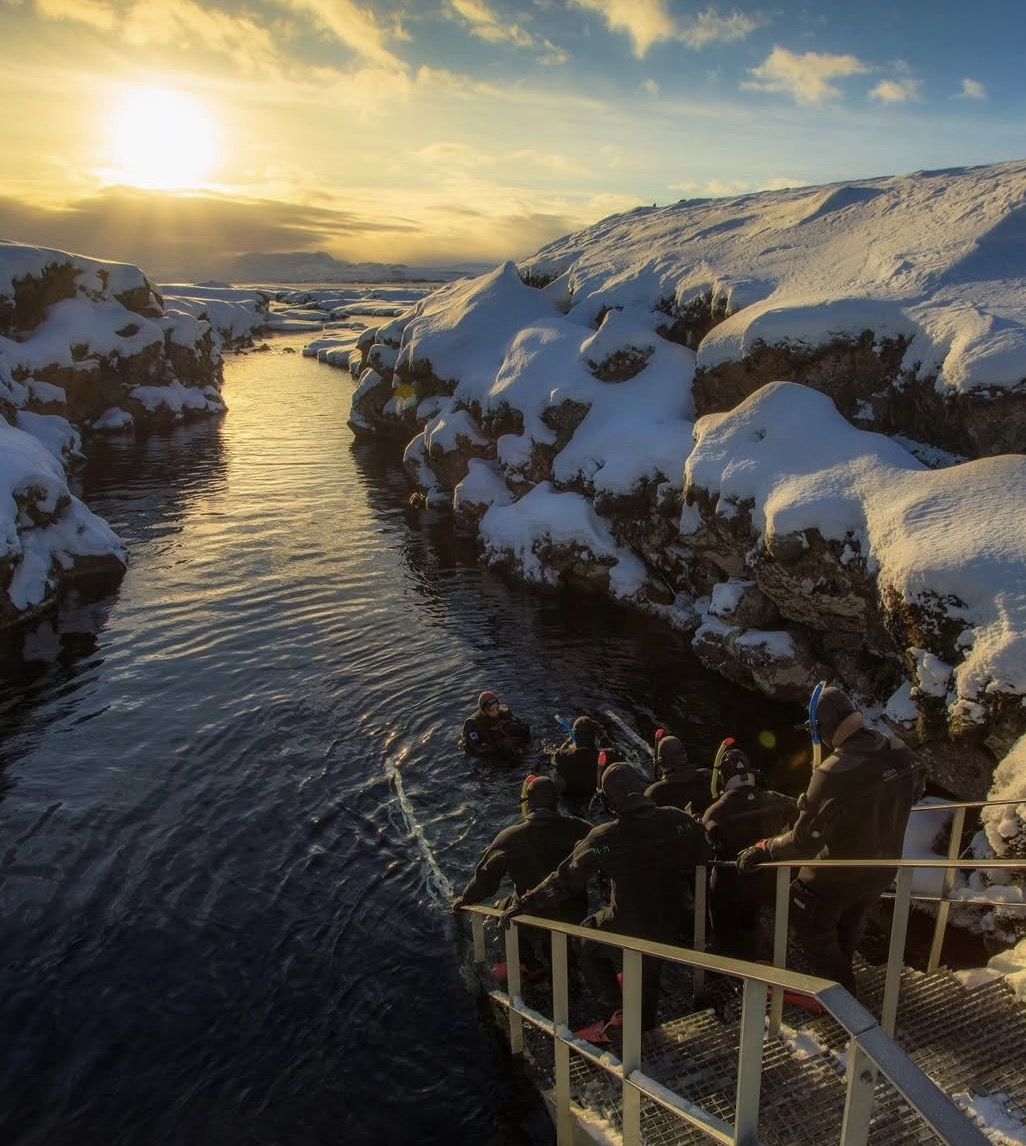
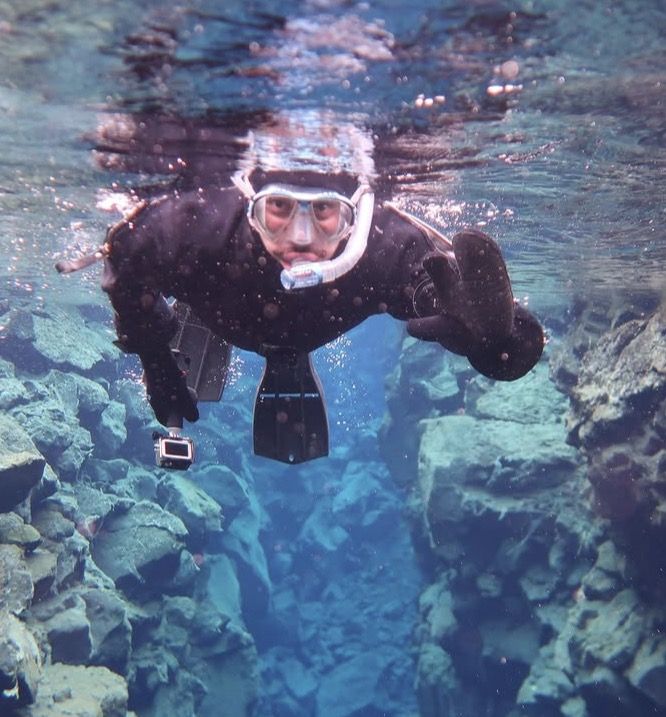
The water that fills Silfra is among the purest found anywhere on Earth, and its journey to the fissure is as extraordinary as the destination itself. Originating as precipitation and snowmelt on the Langjökull glacier roughly 50 kilometres away, the water seeps slowly through Iceland's porous lava fields before emerging in Þingvallavatn Lake. This multi-decade filtration through volcanic rock strips the water of virtually all impurities and particulates. Visibility in Silfra regularly exceeds 100 metres, making it one of the clearest freshwater dive sites on the planet. The water temperature remains a remarkably stable 2 to 4 degrees Celsius year-round, preserved by the insulating properties of the surrounding lava.
Þingvallavatn Lake, the body of water into which Silfra drains, holds its own remarkable place in Icelandic natural history. It is Iceland's largest natural lake, covering approximately 84 square kilometres, and sits within the active rift zone of Þingvellir National Park. The lake is home to four unique subspecies of Arctic char found nowhere else on Earth, evolving in isolation since the last Ice Age. Silfra is effectively a flooded tectonic crack within this lake system, and the fissure itself descends to depths of around 63 metres at its deepest point. Divers typically explore the shallower sections, reaching maximum recreational depths of around 18 to 25 metres.
Beyond its geological and hydrological wonders, Silfra occupies a landscape steeped in human history. Þingvellir is where Viking settlers established the Alþingi — one of the world's oldest parliaments — in 930 AD, making the surrounding area a cradle of Icelandic democracy and culture. The name Þingvellir itself translates as 'Parliament Plains,' and the site was where free men gathered annually to settle disputes, pass laws, and trade. Silfra therefore sits in a landscape layered with both natural and cultural significance, the geological drama of drifting continents unfolding beneath the very fields where Iceland's earliest national identity was forged.
Þingvellir National Park, which encompasses the Silfra fissure, was established in 1930 to mark the one thousandth anniversary of the Alþingi. It was Iceland's first national park, reflecting the deep cultural and natural importance of the landscape. In 2004, UNESCO designated Þingvellir a World Heritage Site, formally recognising its outstanding universal value as both a geological phenomenon and a site of extraordinary historical significance. The inscription acknowledged the park's unique position as a place where the Mid-Atlantic Ridge is visible above sea level, and where a literate, law-based society first took root in the North Atlantic more than a thousand years ago.
Silfra first attracted serious attention from the diving community in the 1970s and 1980s, as Icelandic and international divers began exploring the remarkable clarity and accessibility of its waters. Early expeditions were modest affairs undertaken by pioneering enthusiasts willing to brave sub-zero water temperatures in rudimentary drysuits. As drysuit technology improved through the 1990s and Iceland's tourism infrastructure expanded, Silfra gradually became recognised as a world-class dive destination. By the early 2000s, guided dive tours were becoming commercially established, drawing visitors from across Europe, North America, and beyond who sought the unique thrill of diving between two tectonic plates.
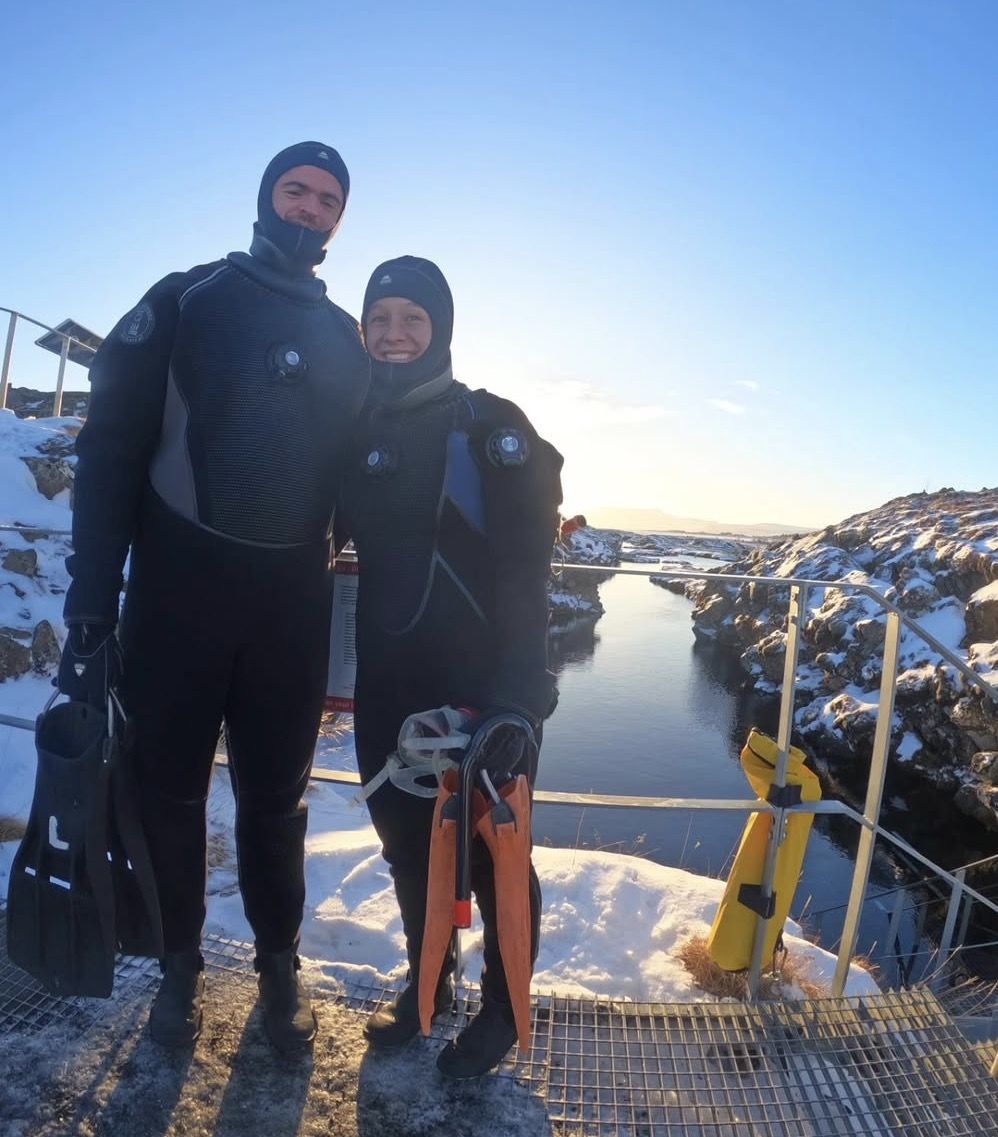
The introduction of guided snorkelling tours significantly broadened Silfra's appeal, opening the fissure's wonders to non-divers equipped with drysuits, masks, and fins. This development proved transformative for the site's popularity. The allure of floating effortlessly above a tectonic canyon in water of almost supernatural clarity, touching both the North American and Eurasian plates simultaneously, captured global imaginations. Travel media coverage intensified through the 2010s, and Silfra regularly appeared on international bucket lists and adventure travel rankings. Strict permit systems and guided-only access rules were introduced and enforced to protect the fragile environment from the pressures of growing visitor numbers.
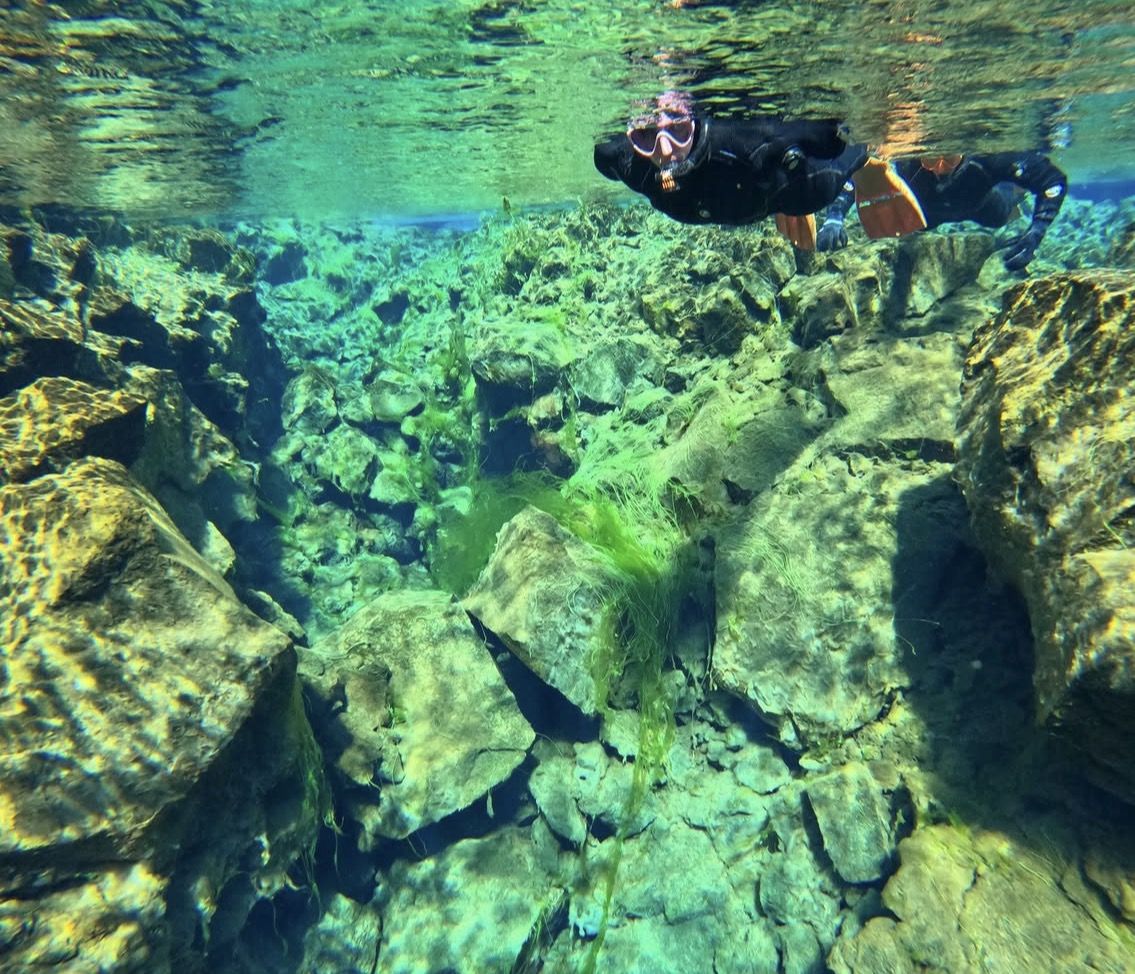
Today, Silfra welcomes thousands of divers and snorkellers annually, all of whom must book through licensed tour operators authorised by the Þingvellir National Park authority. Groups are kept deliberately small to minimise environmental impact, and strict rules govern behaviour in and around the fissure — no touching the algae-covered walls, no disturbing the sediment, no unguided access. The site is divided into four main sections: Silfra Hall, Silfra Cathedral, Silfra Garden, and the Silfra Lagoon, each offering a distinct character and depth profile. Silfra Cathedral, with its soaring walls and extraordinary light, is widely considered the most breathtaking passage in the entire system.
Whether you are an experienced technical diver or a first-time snorkeller, Silfra delivers an experience that is simply impossible to replicate anywhere else on Earth. The combination of pristine glacial water, living tectonic geology, and a landscape wrapped in a thousand years of human history creates something profoundly memorable. Certified dive tours and introductory snorkel experiences are available year-round, guided by expert local operators who ensure both your safety and the site's long-term preservation. If the idea of floating between two continents in water of extraordinary clarity speaks to your sense of wonder, Silfra is waiting — and it rewards every visitor who makes the journey.
Ready to Experience It Yourself?
Silfra is one of those rare destinations that exceeds every expectation — a place where geology, history, and sheer natural beauty converge in the most spectacular way. Guided snorkel and dive tours depart year-round, with expert operators ensuring a safe, unforgettable experience. Browse our hand-picked Silfra tours below and secure your spot in one of the world's greatest underwater wonders.
Book Your Tour Now